In-House Local Delivery SEO: How to Outrank DoorDash and UberEats
Stop losing 30% of your margins to third-party apps. Learn how independent restaurants, florists, and bakeries can use local delivery SEO to outrank DoorDash and drive direct orders.
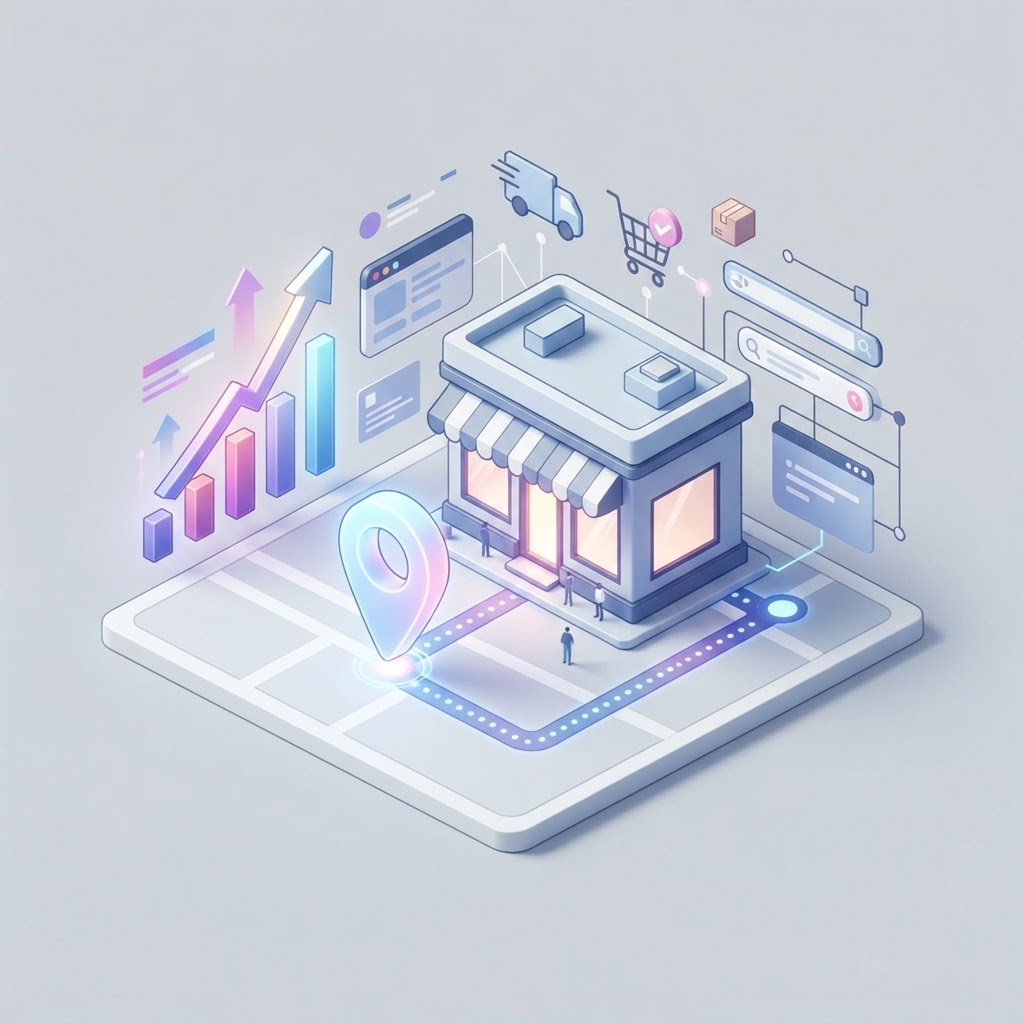
Third-party delivery apps are slowly bleeding independent businesses dry. Whether you run a local restaurant, a neighborhood bakery, or an independent florist, platforms like DoorDash and UberEats promise visibility but extract up to 30% of your margins in return. Worse, they hijack your local search presence, ensuring that when a customer searches for your business, the app ranks first, forcing you to pay a commission for a customer who was already looking for you.
If you want to take back your margins, you need an in-house local delivery SEO strategy. You have to outrank the aggregators for your own branded terms and capture high-intent non-branded searches like "pizza delivery near me" or "same day flower delivery [city]." Here is the candid, practical playbook for bypassing the apps and driving direct, zero-commission orders.
See how clearly your website communicates your location and services.
InspectRank reviews your local visibility signals and gives you a clear, prioritized report.
Get My Free ReportThe True Cost of Relying on Third-Party Delivery Apps
Delivery aggregators occupy massive real estate in local search results. According to industry data, food delivery apps have become an entrenched part of how consumers discover businesses. When you rely entirely on them, your own website becomes an afterthought. You lose the customer data, you lose the margin, and you lose control over the customer experience.
The fix is not to fight the delivery platforms blindly—most businesses still need them for baseline order volume. The fix is to build a parallel, highly optimized direct-ordering path that captures the customers who actually want to buy directly from you.
Step 1: Reclaim Your Google Business Profile Ordering Links
When a hungry searcher decides between three restaurants in a map pack, they make that decision in seconds. If your Google Business Profile (GBP) defaults to a DoorDash or UberEats ordering link, you are voluntarily giving away your margin.
Google allows you to set a preferred ordering link. You must explicitly mark your in-house delivery or pickup URL as the primary link. Furthermore, you need to clearly separate dine-in versus delivery intent across your profile attributes. If you offer in-house delivery, ensure the "Delivery" attribute is checked, and update your Google Business Profile to reflect accurate delivery hours, which often differ from your standard operating hours.
Step 2: Build a Dedicated In-House Delivery Page (Stop Using PDFs)
A PDF menu is a dead end for search engines. Google indexes PDFs, but they create terrible mobile experiences and lack the structured data necessary to rank for delivery queries. If you want to outrank UberEats, you need a dedicated, HTML-based delivery page on your website.
This page should clearly state your delivery radius, minimum order requirements, delivery fees, and expected times. Use clear headings like "Direct Local Delivery in [City]" and embed your native ordering system directly on the page. If you run a retail operation, optimizing for local delivery requires setting up specific shipping zones and local inventory feeds.
See how clearly your website communicates your location and services.
InspectRank reviews your local visibility signals and gives you a clear, prioritized report.
Get My Free ReportStep 3: Implement Delivery and Menu Schema Markup
Search engines do not just read text; they rely on structured data to understand context. To compete with massive directories, you must implement local business schema markup.
For restaurants, this means using Menu schema to detail your offerings and LocalBusiness schema with the makesOffer property to define your delivery services. You can also use DeliveryChargeSpecification to explicitly tell Google your delivery boundaries and fees. This structured data is exactly what AI search engines like ChatGPT and Google's AI Overviews read when a user asks, "What is the best Italian restaurant that delivers directly in downtown?"
Step 4: Target Hyper-Local Neighborhood Delivery Keywords
You are not going to outrank DoorDash for the broad term "food delivery." Instead, you need to target hyper-local neighborhood modifiers. Create content or optimize your delivery page for specific neighborhoods, intersections, or local landmarks.
For example, instead of "flower delivery Chicago," target "same-day flower delivery in Lincoln Park." Use these modifiers naturally in your page titles, meta descriptions, and body content. Mentioning specific neighborhoods proves local relevance that national apps struggle to replicate authentically.
Step 5: Optimize Your Services and Products Tabs
Most local businesses leave their Google Business Profile services and products tabs completely blank. This is a massive missed opportunity. List your specific delivery offerings as products or services. If you are a bakery, list "Custom Cake Local Delivery" as a product with a price range and a direct link to your in-house ordering page. This takes up more visual space on the search results page and pushes third-party links further down.
Conclusion: Take Back Your Margins
Outranking DoorDash and UberEats is not about having a bigger marketing budget; it is about having a smarter, more localized technical foundation. By reclaiming your Google Business Profile links, ditching PDF menus for optimized delivery pages, implementing schema markup, and targeting hyper-local neighborhoods, you can train Google—and your customers—to order directly from you. Stop paying a 30% tax on your own brand visibility. Build your in-house local delivery SEO strategy today.
Sources & references
See what InspectRank finds on your website
Get a clear report covering website SEO, technical health, local visibility and AI search readiness.
Get My Free ReportRelated guides
Local SEO for Junk Removal: Outranking National Franchises for High-Margin Cleanouts
Stop losing high-margin cleanout jobs to national franchises. Learn how independent junk removal and dumpster rental operators can use local SEO to dominate the Google Map Pack.
Local SEO for Home Inspectors: Capturing Out-of-Town Buyers and Realtor Referrals
Stop relying entirely on real estate agent referrals. Learn how home inspectors can use local SEO to capture high-intent, out-of-town buyers and dominate the Google Map Pack.
Construction Zone SEO: How to Maintain Foot Traffic When Your Street is Closed for Repairs
Don't let orange cones destroy your revenue. Learn how to use local SEO, Google Business Profile updates, and detour pages to keep customers coming during road construction.
Pricing Page Local SEO: Why Local Service Businesses Must Publish Rates to Capture High-Intent Traffic
Stop hiding your rates behind a phone call. Learn why local service businesses must publish pricing pages to capture high-intent search traffic and improve conversions.
Bilingual Local SEO: How to Rank Your Business for Spanish-Language Searches in Your City
Stop ignoring a third of your market. Learn the exact bilingual local SEO strategy to rank your business for Spanish-language searches and optimize your Google Business Profile.