Local SEO Without a Website: Maximizing Your Google Business Profile and Social Media
Think you need a website to show up on Google? Learn how new small businesses and side hustles can use Google Business Profile, social media, and local directories to dominate local SEO without a website.
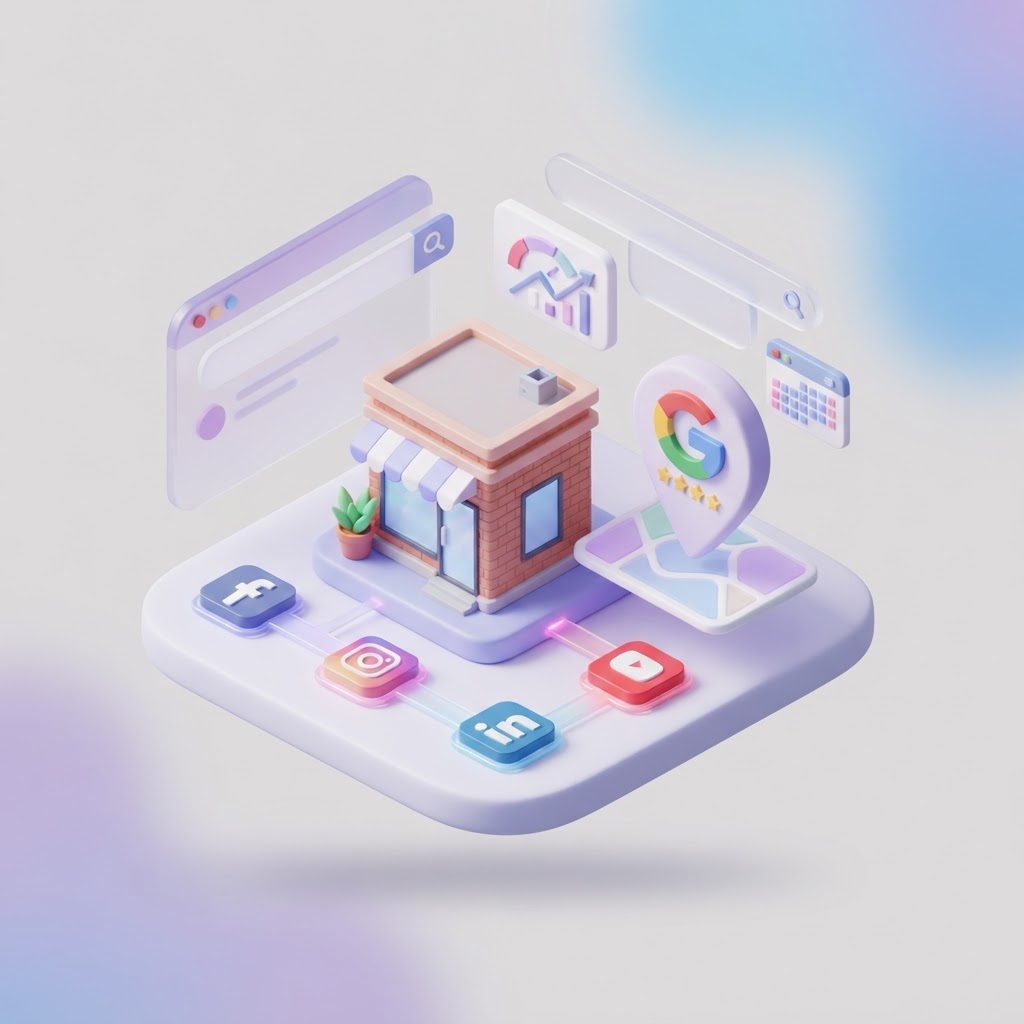
Can you rank on Google without a website? Yes. While traditional SEO focuses on optimizing web pages, local SEO is fundamentally different. When someone searches for a "plumber near me" or "best coffee shop," search engines prioritize proximity, relevance, and prominence—signals that do not strictly require a website.
For new small business owners, micro-businesses, and side hustles, building a website can feel like an expensive, time-consuming hurdle. But you do not have to wait until your site is perfect to start capturing local search traffic. By maximizing your Google Business Profile, local directories, and social media platforms, you can build a powerful local search presence entirely for free.
See how clearly your website communicates your location and services.
InspectRank reviews your local visibility signals and gives you a clear, prioritized report.
Get My Free ReportWhy Local SEO Without a Website Works
Google's local algorithm is designed to connect searchers with real-world businesses. To do this, it relies heavily on the "Local Pack" (the map and three business listings that appear at the top of local search results). According to industry surveys, many SEO professionals consider your Google Business Profile to be the most important ranking factor for the map pack.
Google wants to verify that your business exists, know what you sell, and see that customers trust you. You can provide all of this information through third-party platforms.
Step 1: Dominate the Google Map Pack
Your Google Business Profile (GBP) is your digital storefront. If you do not have a website, this is where 90% of your local SEO effort should go.
Claim and Verify Your Profile
Start by claiming your business on Google. You will need to verify your location, usually via a video recording or a postcard. Once verified, you control the information Google displays about your business.
Optimize Your Core Information (NAP)
Your Name, Address, and Phone number (NAP) must be perfectly accurate. If you are a service-area business (like a mobile detailer or a plumber working from home), you can hide your physical address and set a service area instead.
Select the Right Categories
Your primary category is the strongest ranking signal on your profile. Be specific. If you fix pipes, choose "Plumber," not "Contractor." You can add secondary categories to cover other services, but your primary category dictates how Google understands your core business.
Leverage Photos and Updates
Profiles with high-quality photos receive significantly more direction requests and phone calls. Upload photos of your work, your equipment, and your team. Use the "Updates" feature to post weekly about your services, acting almost like a micro-blog to keep your profile fresh.
Seed Your Own Q&A
The Q&A section on your GBP is crowd-sourced, meaning anyone can ask or answer questions. Do not leave this blank. Log in and ask the most common questions your customers have (e.g., "Do you offer free estimates?"), then answer them yourself. This controls the narrative and feeds Google's AI valuable information about your services.
Step 2: Claim Apple Business Connect and Bing Places
Google is not the only map in town. Millions of users rely on Apple Maps (the default on iPhones) and Bing (integrated into Windows and ChatGPT). Claiming your profiles on these platforms is free and takes minutes.
- Apple Business Connect: Essential for reaching iOS users who search directly in Apple Maps.
- Bing Places: Syncs directly with your Google Business Profile, making it incredibly easy to manage.
Step 3: Treat Social Media Like Local Search Engines
Social media platforms are increasingly acting as search engines. Younger demographics often search TikTok or Instagram for local recommendations before they ever open Google.
See how clearly your website communicates your location and services.
InspectRank reviews your local visibility signals and gives you a clear, prioritized report.
Get My Free ReportFacebook Business Page
A Facebook Business Page acts as a mini-website. It allows you to list your hours, collect reviews, post updates, and even use a "Book Now" or "Call Now" button. Because Facebook has massive domain authority, your Facebook page will often rank on the first page of Google for your brand name.
Instagram and TikTok SEO
Optimize your social profiles for local search by including your city and service in your bio (e.g., "Austin Custom Cakes"). Use local hashtags and geotag your posts. When users search for local services on these platforms, your optimized profile will surface.
Step 4: Leverage Local Directories and Citations
Citations are mentions of your business name, address, and phone number across the web. They validate your business's existence to search engines.
| Platform | Best For | SEO Benefit |
|---|---|---|
| Yelp | Restaurants, Home Services, Retail | High domain authority; feeds data to Apple Maps. |
| Nextdoor | Neighborhood Services, Contractors | Hyper-local trust and community recommendations. |
| YellowPages | Traditional Services | Core data aggregator for local search engines. |
Ensure your information is identical across all platforms. A mismatched phone number or misspelled address confuses search engines and dilutes your local authority.
Step 5: Use WhatsApp Business for Direct Conversions
If you do not have a website to process orders or answer inquiries, WhatsApp Business is a powerful alternative. You can set up a business profile, automate greeting messages, and most importantly, create a product or service catalog. Customers can browse your offerings and message you directly to buy, creating a frictionless conversion path.
The Limits of "No Website" SEO: When Is It Time to Upgrade?
While you can absolutely generate leads without a website, relying entirely on third-party platforms carries risks. You do not own your Google Business Profile or your Facebook page—they do. If an algorithm changes or your profile is accidentally suspended, your lead generation stops overnight.
Eventually, you will want to build a website to:
- Own your audience: A website is digital real estate you actually own.
- Target broader keywords: A GBP ranks well for "near me" searches, but a website is required to rank for informational queries or broader regional terms.
- Build brand authority: A professional website builds a level of trust that a social media page simply cannot match.
Conclusion
Do not let the lack of a website stop you from capturing local search traffic. By claiming your Google Business Profile, optimizing your social media channels, and ensuring your business is listed accurately across local directories, you can build a robust local SEO strategy today. Start with Google Maps, gather customer reviews, and let your online presence grow alongside your business.
Sources & references
See what InspectRank finds on your website
Get a clear report covering website SEO, technical health, local visibility and AI search readiness.
Get My Free ReportRelated guides
Local SEO for Junk Removal: Outranking National Franchises for High-Margin Cleanouts
Stop losing high-margin cleanout jobs to national franchises. Learn how independent junk removal and dumpster rental operators can use local SEO to dominate the Google Map Pack.
Local SEO for Home Inspectors: Capturing Out-of-Town Buyers and Realtor Referrals
Stop relying entirely on real estate agent referrals. Learn how home inspectors can use local SEO to capture high-intent, out-of-town buyers and dominate the Google Map Pack.

Construction Zone SEO: How to Maintain Foot Traffic When Your Street is Closed for Repairs
Don't let orange cones destroy your revenue. Learn how to use local SEO, Google Business Profile updates, and detour pages to keep customers coming during road construction.

Pricing Page Local SEO: Why Local Service Businesses Must Publish Rates to Capture High-Intent Traffic
Stop hiding your rates behind a phone call. Learn why local service businesses must publish pricing pages to capture high-intent search traffic and improve conversions.
Bilingual Local SEO: How to Rank Your Business for Spanish-Language Searches in Your City
Stop ignoring a third of your market. Learn the exact bilingual local SEO strategy to rank your business for Spanish-language searches and optimize your Google Business Profile.